

Drive AI transformation in your org: Lately @ Lucid May 2026 🥳
We know that artificial intelligence (AI) is increasing individual productivity, but has AI adoption translated into org-wide benefits? Or are you stuck somewhere in the messy middle of high-speed chaos with more output, but nothing that scales?
In our third Lately @ Lucid webinar of 2026, we covered how Lucid can help your teams visualize systems and processes to drive AI transformation for your org. Documentation is the critical step to bridge the gap between AI adoption at the individual level and institutional level.
In order to build documentation that moves the needle at scale, it should be dynamic, connected, and easily governed.
This post serves as a roundup of key features you can leverage TODAY to make this a reality for your teams. ⏬
Process Agent
We know that documentation is essential, but it’s also time-consuming to create and quickly goes out of date. Enter Lucid AI’s Process Agent: an interactive assistant designed to help you build comprehensive process diagrams without staring at a blank canvas, and iterate on them in seconds.
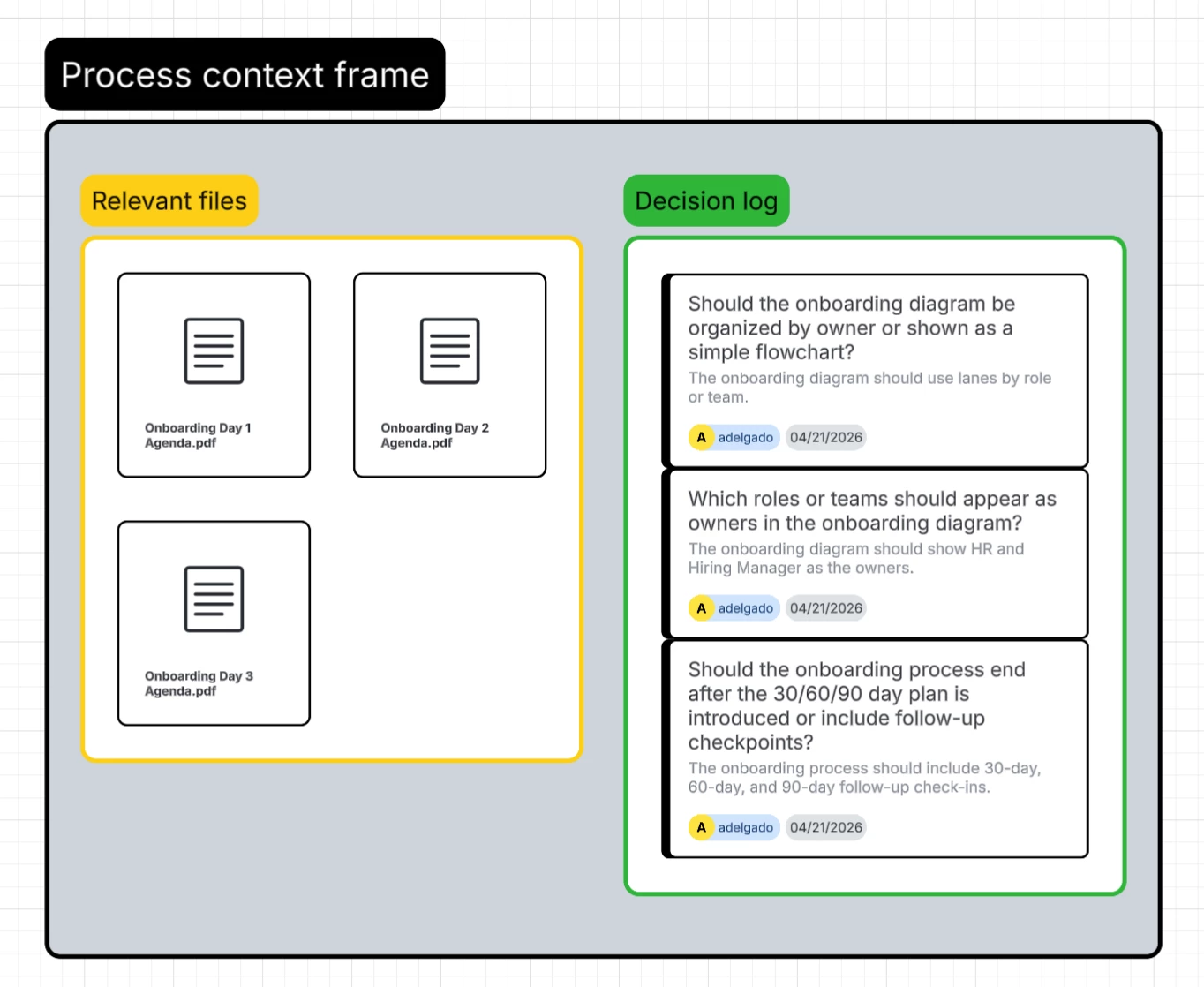
Think of it like a consultant—instead of just spitting out a generic flowchart, the Process Agent starts a back-and-forth conversation and asks relevant follow-up questions to gather context and logic. Based on your answers, it provides a polished first draft, along with a summary of the flow and a decision log of your chat history.
We’re excited to announce a few new capabilities to the Process Agent!
- Context frame: Add documents for the Process Agent to reference and view a decision log with chat history.
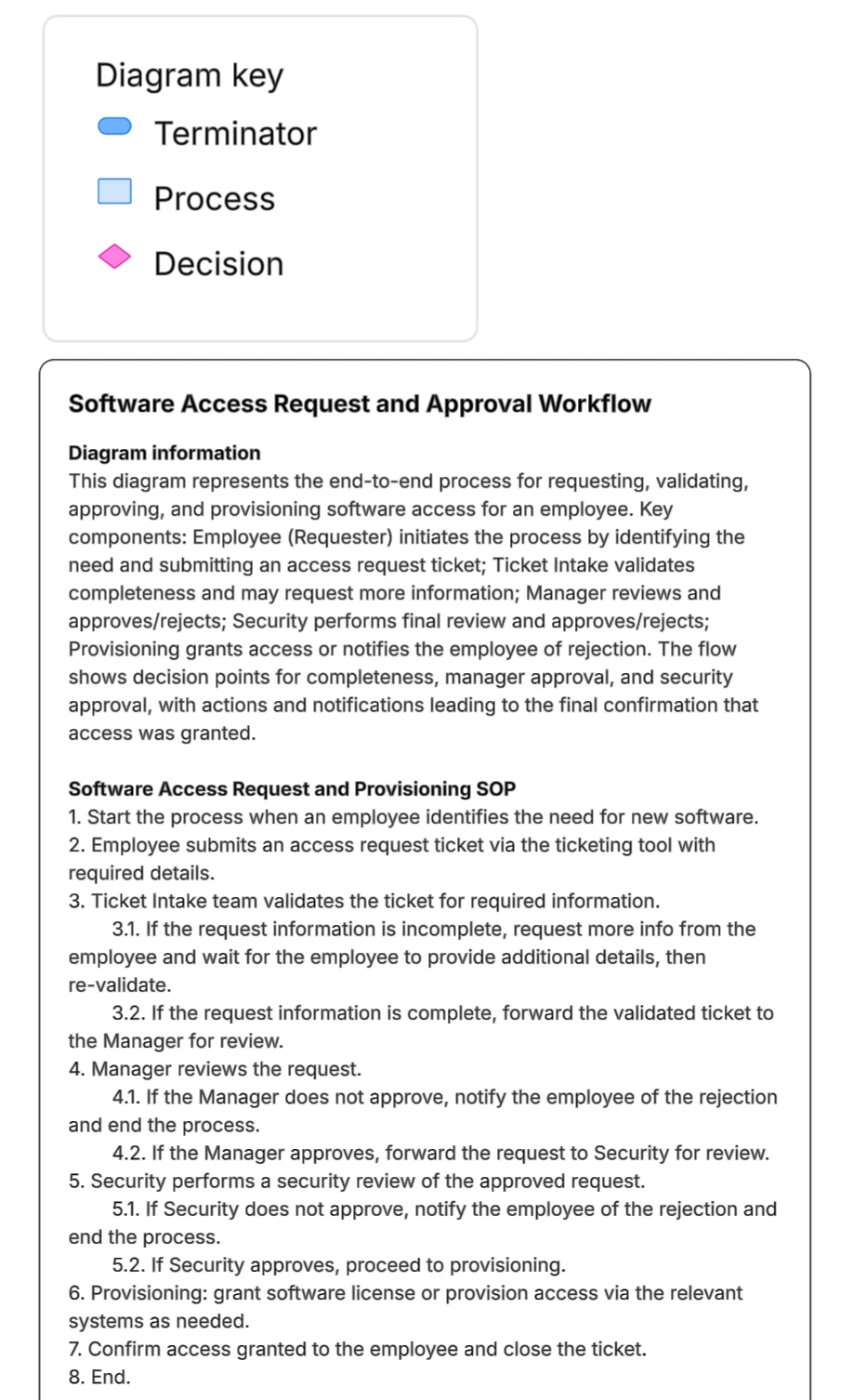
- Summary and diagram key creation: The agent automatically creates a summary of the diagram and process, as well as a diagram key.
- Evaluation: Ask the Process Agent to review your diagram and suggest improvements.
To learn more and see these in action, check out this community post!
Updates to the Process Accelerator
As your organization scales AI, having a governance system becomes a top priority. The Process Accelerator provides your teams with standardization and control over how you store, document, and publish critical processes.
Here is a recap of the core features already helping teams streamline their workflows.
- Centralized repositories: Create an easily accessible, searchable single source of truth for all official business and AI workflows. Workflows are edited in draft form so live documentation remains untouched until changes are ready.
- Asset library: Build reusable, standardized components across your documentation. When a component in the asset library is updated, those changes automatically propagate everywhere that asset is used across the organization- ensuring immediate compliance. (Hello, dynamic documentation that is easily updated!)
- Approval workflows: Streamline stakeholder reviews with approval flows. Require designated repository owners to review and approve documentation updates before they are published.
Now, we’re excited to announce some new capabilities!
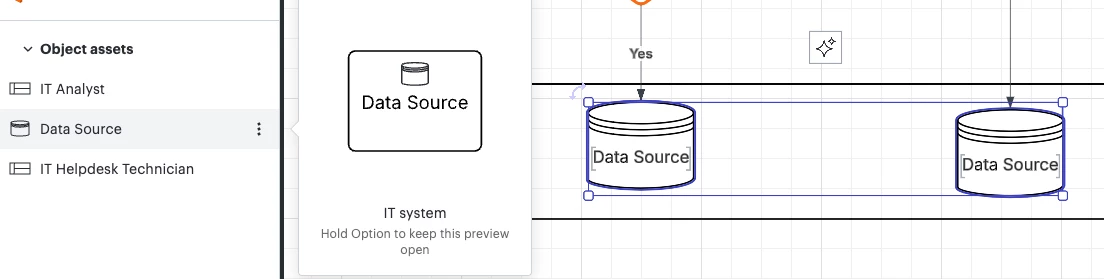
- Object assets: Object assets are standardized, reusable shapes with predefined data structures. These assets help create consistent documentation that can be easily edited at scale.
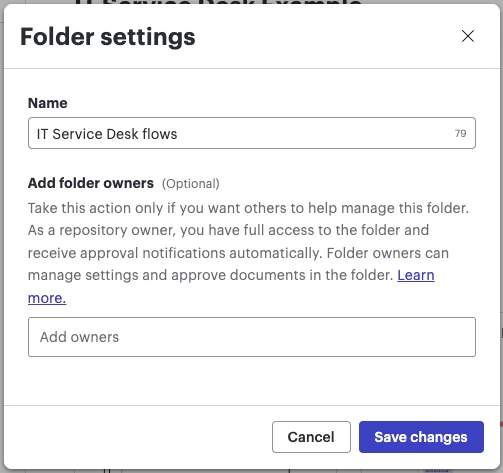
- Folder owners: Now repository owners can assign folder owners to manage and approve documents in a specific repository folder- think of them as the subject matter experts over a specific topic.
- Sequential approval flows: Automate handoffs with a bottom-up sequential approval flow, ensuring the right stakeholders review content in the right order.
💡Solution story
The challenge: Imagine employees in marketing, product, and HR have individually adopted unvetted AI tools to speed up their work. While individual output is up, IT and enterprise architecture (EA) teams are flying blind. Sensitive data is being pasted into public LLMs, software spend is increasing, and if AI vendors change data policies overnight, you’re looking at serious compliance risks. Individual AI hacks are introducing institutional risk.
The solution: The EA team uses Lucid to audit, standardize, and govern how AI technologies interact with corporate data and personal workflows:
- Search for and summarize relevant documentation: They use the MCP Server to quickly summarize existing AI workflows and documentation in order to understand how multiple departments currently use AI tools in their work.
- Create new process documents: The EA team leverages the Process Agent to create new processes for employees to request access to new LLMs and to evaluate what data they place in approved tools.
- File all documents into a repository and determine approval flows: Now, with a new framework for AI usage across the org, they add the documentation to a repository using the Process Accelerator. They set approval flows, so any edits to the system trigger a mandatory review by legal and security.
- Create an asset library to set universal standards: Approved data-governance guidelines are saved as reusable components in the asset library. When IT updates security protocols next month, they update the asset once, and the change instantly updates across all documents that use the asset.
The result: What began as a fragmented, risky web of individual AI habits is transformed into transparent, governed corporate standards and processes.
Ready to take the first step to AI transformation in your organization?
Read the full blog post here to dive deeper!
We want to hear from you!
- Do you resonate with these challenges?
- How is your team currently tackling AI at the org-wide level?
- Which of these tools are you most excited to bring into your workflow this month?
Let us know in the comments below! 👇
 Your privacy choices


