News

ERD enhancements and newly supported databases! 🆕

  • October 1, 2025
  • 4 replies
  • 205 views

Forum|alt.badge.img

Manually creating ERDs and exporting diagram updates can be tedious and time-consuming. We’re excited to announce a few new enhancements to make this process more efficient! 

Let’s dive into what’s new! ⏩


Newly supported databases for ERD import and export


Lucid has expanded ERD import and export to support Snowflake, Databricks, Redshift, Azure SQL Database, and Google BigQuery. Quickly import database schemas to visualize tables and their relationships. 

We’re excited to now offer our most requested vendors in an effort to make this process more efficient!
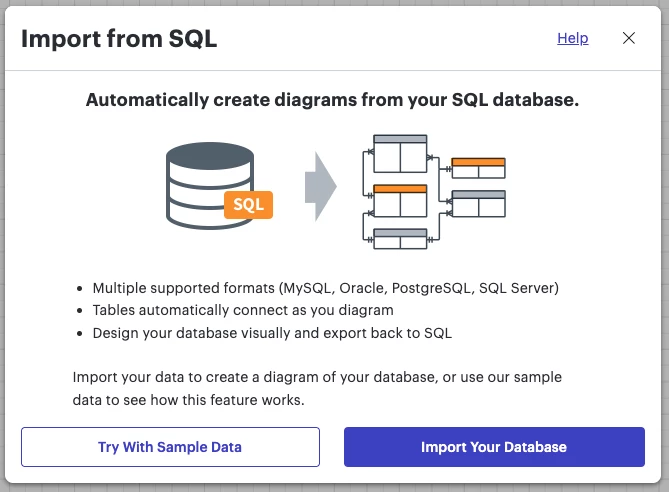


Automatically create entity relationship diagrams from imported data


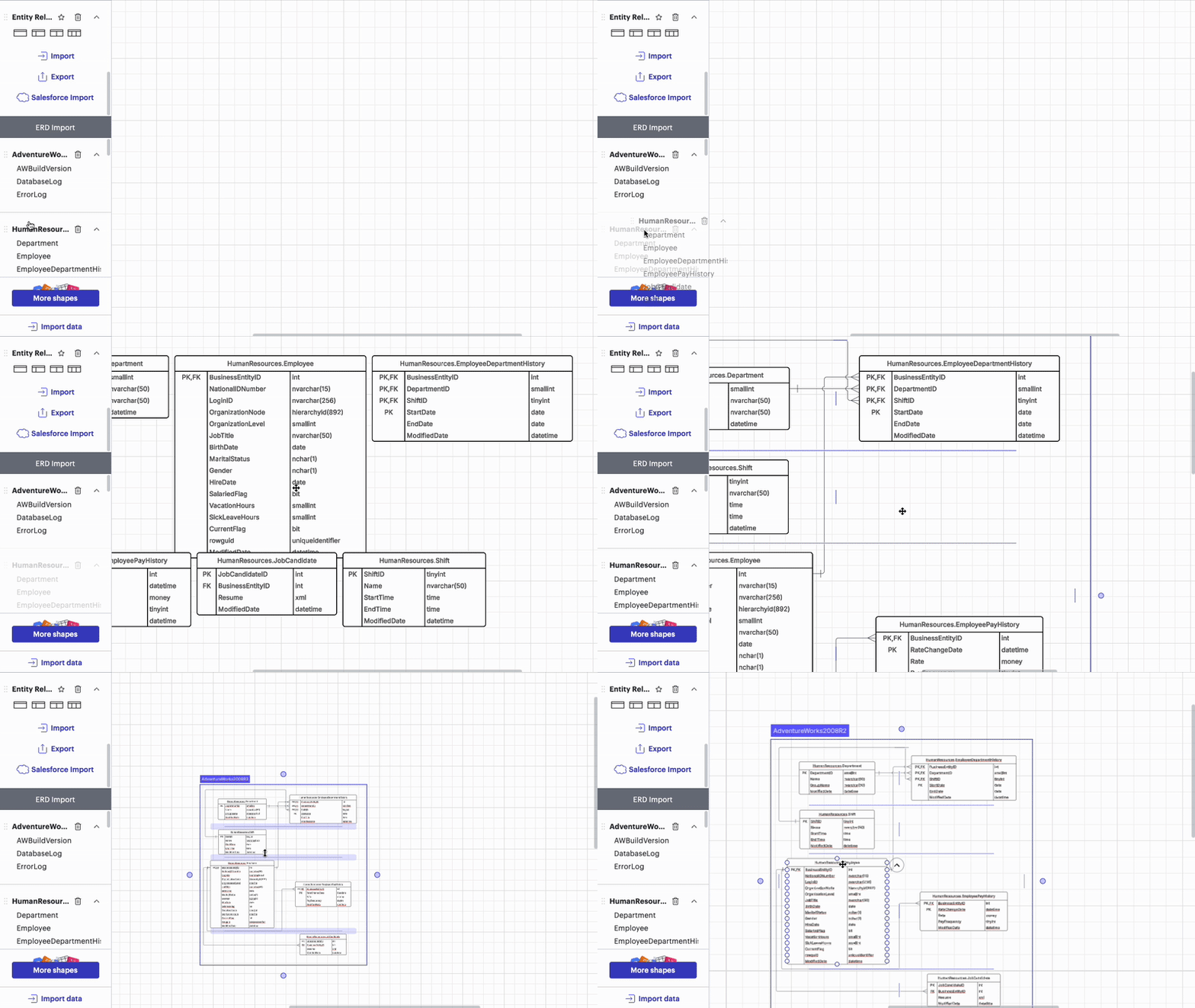
Skip adding data tables to your Lucidchart one by one. Now you can automatically create diagrams from your SQL database! 

Instead, import your data and it will populate in the left-hand panel. From there, you can drag and drop your entire imported database onto the canvas. Your ERD diagram will automatically generate, creating an organized ERD with all tables and relationships. 


Collapsible ERDs


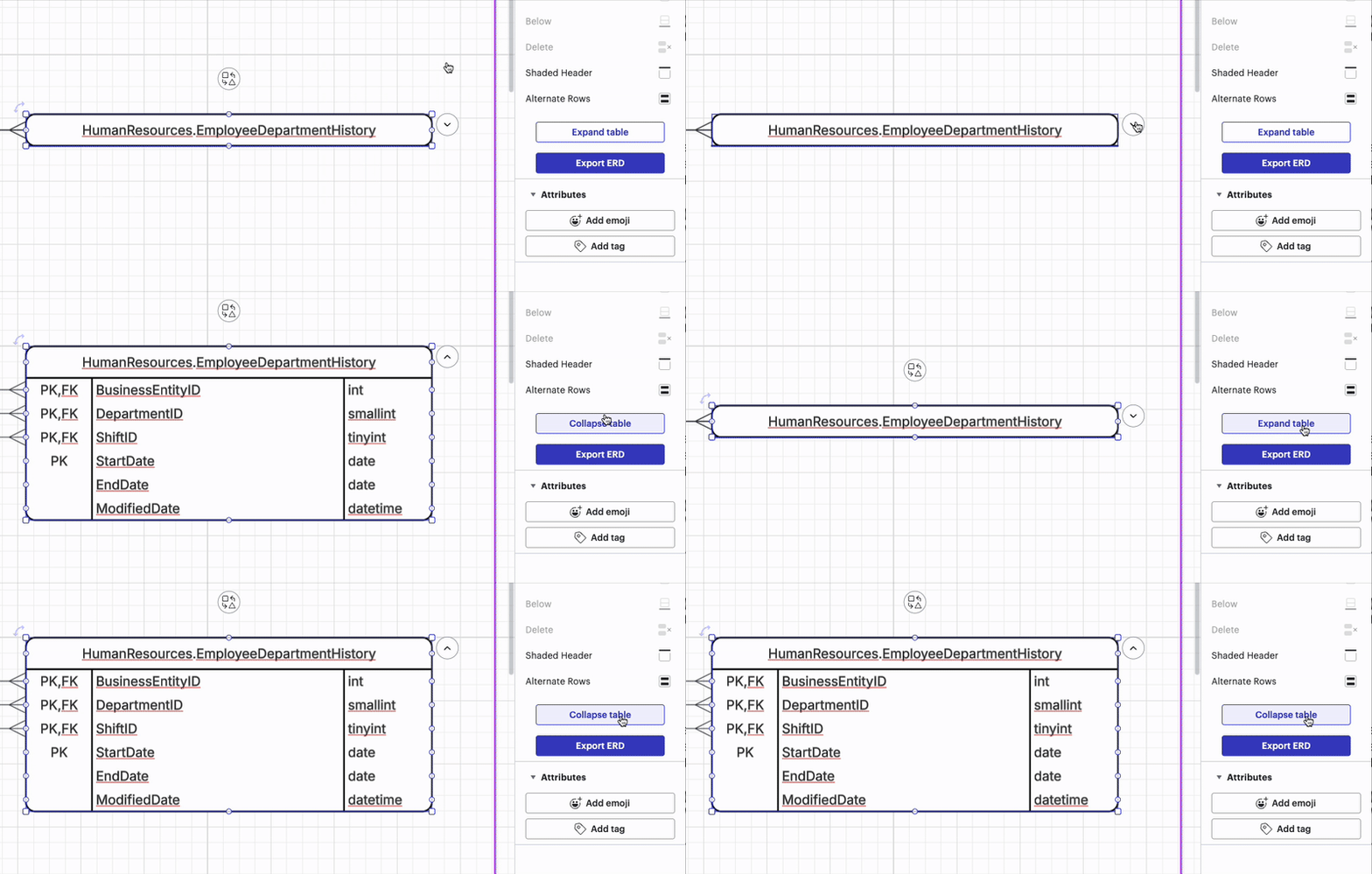
Large entity relationship diagrams can quickly become busy and hard to read. Now, you can collapse and expand tables to tidy up complex ERDs! 

You can navigate to the contextual panel or expand and collapse from the shape itself. 


Ready to test it out yourself?


In Lucidchart, select the ERD shape library and use the sample data available to try it out for yourself! 

To learn more, check out the Create an Entity Relationship Diagram in Lucidchart article from the Lucid Help Center. 


Let us know what you think in the comments below or create a new idea for the Product Feedback space of the community.

Comments

Forum|alt.badge.img+1
  • November 5, 2025

I like the ability to drag all tables of a schema onto a page in one go, but I also like to be able to place the tables individually so that I can control where each table is placed. The trouble with this approach is for large schemas, it is easy to loose track of what tables have been added. Could the table names that have been added to the page be highlighted in some way in the list of tables, so that tables not yet on the page are easily identified?


Ambar D
Forum|alt.badge.img+10
  • Lucid community team
  • November 13, 2025

Hi ​@Paul.Gr, thank you for your thoughts and feedback on this. 

To clarify - are you hoping to highlight the headers/entities? As shown below, you should be able to select all > select Shaded Header in the contextual panel > and select your preferred color. 


I also thought I’d share this template with you in case it’s helpful- ERD with colored entities example (UML notation).

Please let me know if I’m misunderstanding your request here or if you have any further questions. Happy to help!


Forum|alt.badge.img
  • December 3, 2025

The recent enhancement to include schema name in imported ERD objects means that when I re-import from my database to update the diagram, it doesn’t update the existing objects. It wants to create new objects instead.  How can I stop this behaviour.  

I could just create a new diagram, but I went to a lot of trouble to perfect the layout of objects, and I don’t want to have to do all that again.


Ambar D
Forum|alt.badge.img+10
  • Lucid community team
  • December 4, 2025

Hi ​@david.ford, thanks for adding to this thread! 

Sorry you’re having trouble with this. I’m checking internally with our product team and will get back to you as soon as possible.