

Meeting minutes: More than "small writing"
Did you know the term "minutes" doesn't actually refer to time? It comes from the Latin minuta scriptura, meaning "small writing." But don't let the name fool you—meeting minutes have a massive impact on team success. ✅
Too often, we treat minutes as a boring formality. In reality, they are your team's secret weapon for alignment and transparency.
Meeting minutes:
- Build trust: it gives those who couldn't attend a "seat at the table" and keeps everyone in the loop. 🤝
- Drive accountability: no more "wait, was I supposed to do that?" A clear minutes document outlines every owner and deadline. 🏎
- Provide legal backup: they serve as an official record of decisions in case you ever need to revisit the "why" behind a project. 📋
Minutes vs. notes vs. agendas
It's easy to mix these up, but they each have a unique job:
- Agenda: the pre-meeting roadmap (chronological)
- Notes: informal, personal scratchpads
- Minutes: the formal, shared record of decisions and actions (organized by importance)
Here are some pro-tips for better minutes:
- Don't be a stenographer: unless it's a legal hearing, skip the fluff. Stick to the key takeaways and next steps.
- Ask for clarity in the moment: if a decision feels fuzzy, speak up! It’s the only way to ensure the record is accurate.
- Use a template: don't reinvent the wheel every time. Start with a structure that includes the date, attendees, and clear sections for action items. Here’s our free meeting minutes template:
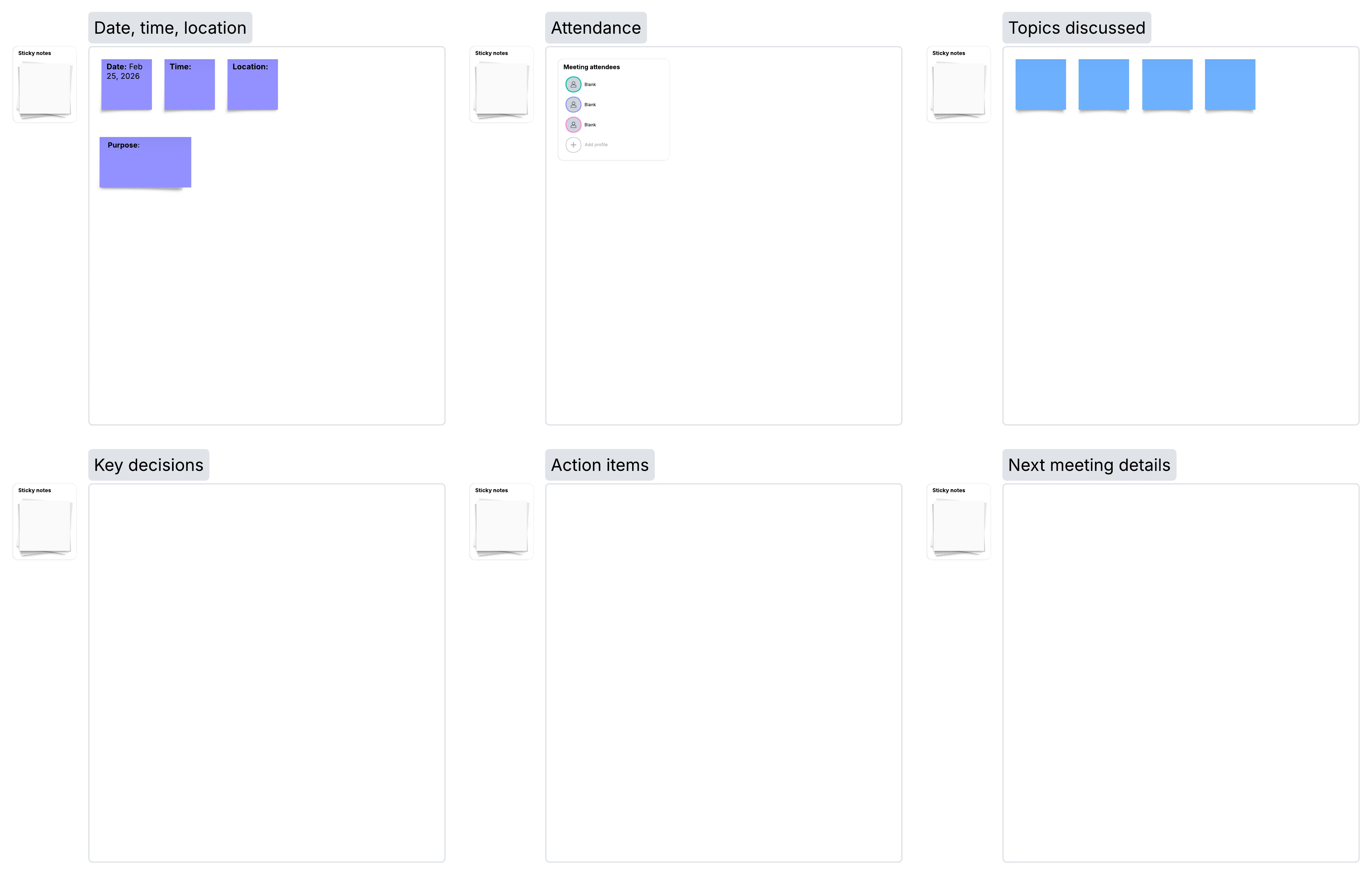
Free meeting minutes template
 Your privacy choices


