


Optimizing Learner Connections: Using a Structured Sharing Exercise to Establish Classroom Belonging
Building a safe, inclusive culture where students feel mutually respected is a vital prerequisite to academic engagement. A highly effective strategy for the beginning of a term is a structured artifact sharing exercise. This low-stakes routine reduces first-week anxieties by anchoring abstract personal traits in concrete objects, allowing students to systematically build peer-to-peer relationships.
Before diving into course syllabi or academic content at the beginning of the school year, establishing a strong relational foundation is essential for cultivating a high-achieving, respectful learning space. When students feel validated and recognized by their instructor and peers, classroom friction decreases and active engagement increases.
A highly adaptable, student-centered strategy to achieve this early in the term is this ready-to-use lesson idea formatted for an educational discussion group. The sharing portion is similar to a morning meeting setup.
How to Structure the Routine:
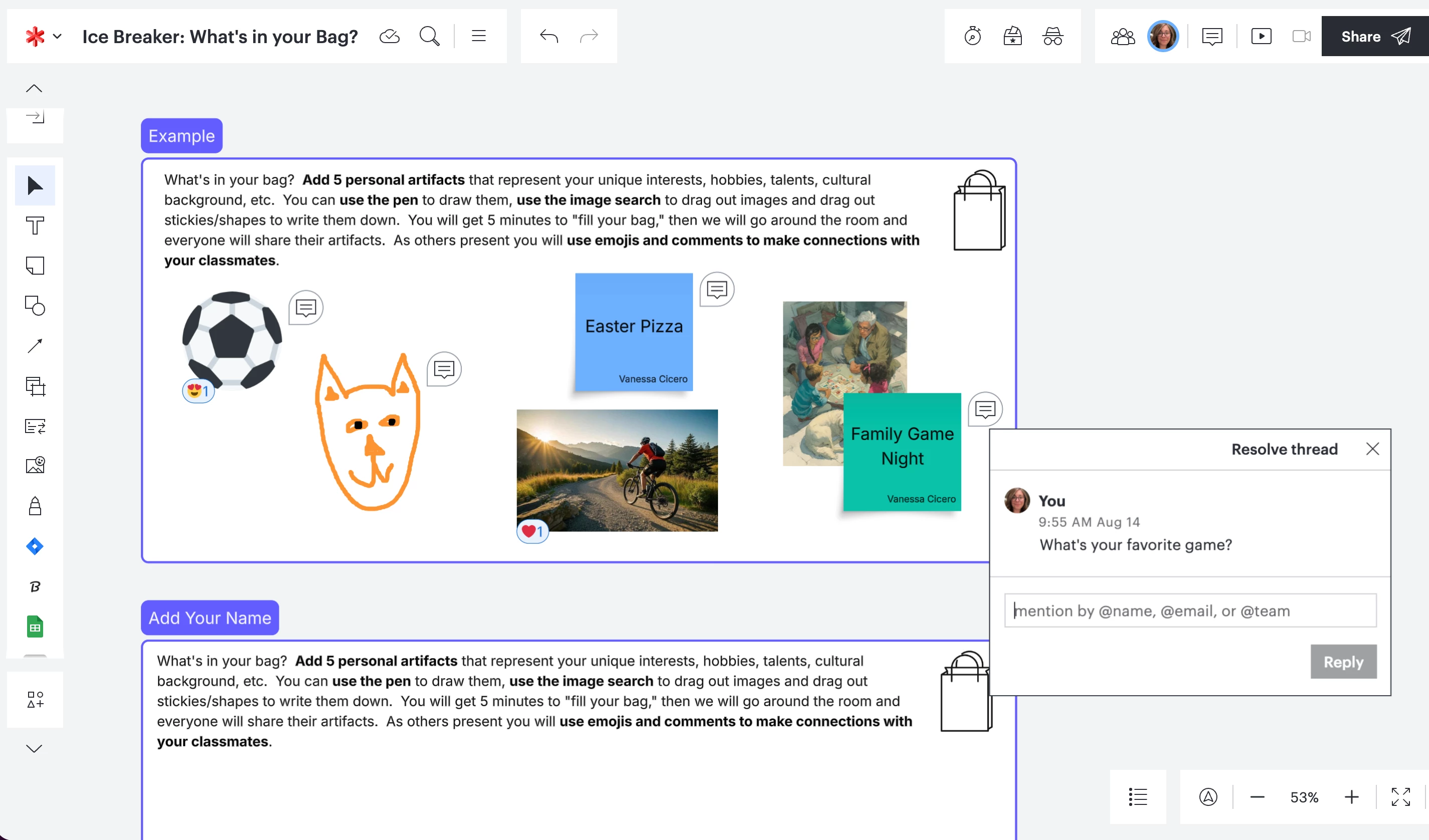
- The Setup: On a digital whiteboard on their own account, or on a square assigned to each student, have students draw a paper lunchbag image. Instruct them to draw or write three to five personal artifacts that they would put inside this bag that represent their unique interests, hobbies, talents, or cultural backgrounds.
- Teacher Modeling: To reduce vulnerability and set an open tone, the educator models the process first by presenting their own items and sharing the personal narratives behind them.
- The Configuration: Arrange the learning environment into a U-shaped seating alignment to maximize physical proximity and ensure face-to-face line of sight.
- Structured Sharing: Grant each individual a dedicated, timed window (e.g., 90 seconds to 2 minutes) to present their items to the group.
- Active Listening Routines: Establish clear safety boundaries to protect participants from judgment. Peers practice focused active listening behaviors (maintaining eye contact, remaining quiet) and are invited to ask up to two constructive, supportive questions per presenter.
- Synthesis and Reflection: On a collaborative Lucidspark space, ask the class to map out commonalities across students. Collect a quick, two-question written reflection as an exit ticket to gauge how the activity impacted their sense of belonging.
Benefits:
- Concrete Communication: Grounding self-expression in physical, concrete objects significantly alleviates public speaking anxiety, making it highly appropriate for various developmental stages.
- Disrupts Anonymity: Swiftly learning personal details and names early in the term removes defensive anonymity that frequently triggers behavioral disengagement.
- Establishes Equity: Giving every student an identical structure and an uninterrupted platform ensures that all voices are verbally and equitably integrated into the classroom community.


 Your privacy choices


