
Add critical thinking to your timelines, story mapping, sequencing, and process maps

  • March 3, 2026
  • 3 replies
  • 117 views

Vanessa C101
Forum|alt.badge.img+15

Idea Spark | Collaboration, Analysis and Sequencing


Template: Revolutionary War Example 

Video: Different ways to set up collaborative sequencing activities


Detailed Walkthrough

In this post we are going to look at how instructors can set up a similar assignment in several different ways to increase the rigor for students by incorporating collaboration and critical thinking.  For this example, we are looking at a Revolutionary war timeline, but this can easily be applied to story mapping in ELA, process mapping in science, and problem solving logic in math.  


Add your examples to the comments of this post to help all our Lucid instructors visualize how this would work across all the different content areas.


Option 1 | Drag and Drop 


1- The instructor divides students into groups 
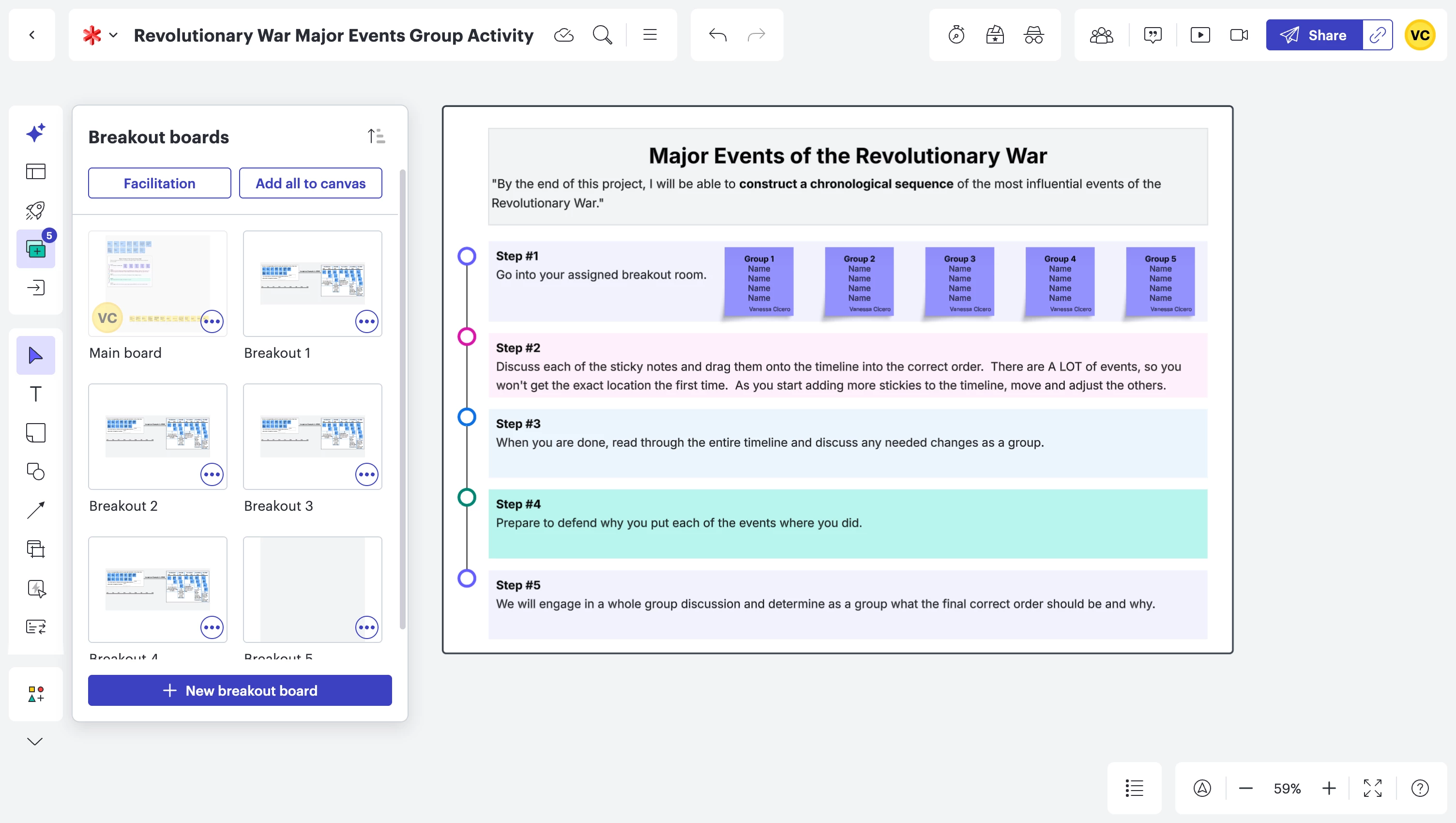
 

2- Each group is given a list of the key events 
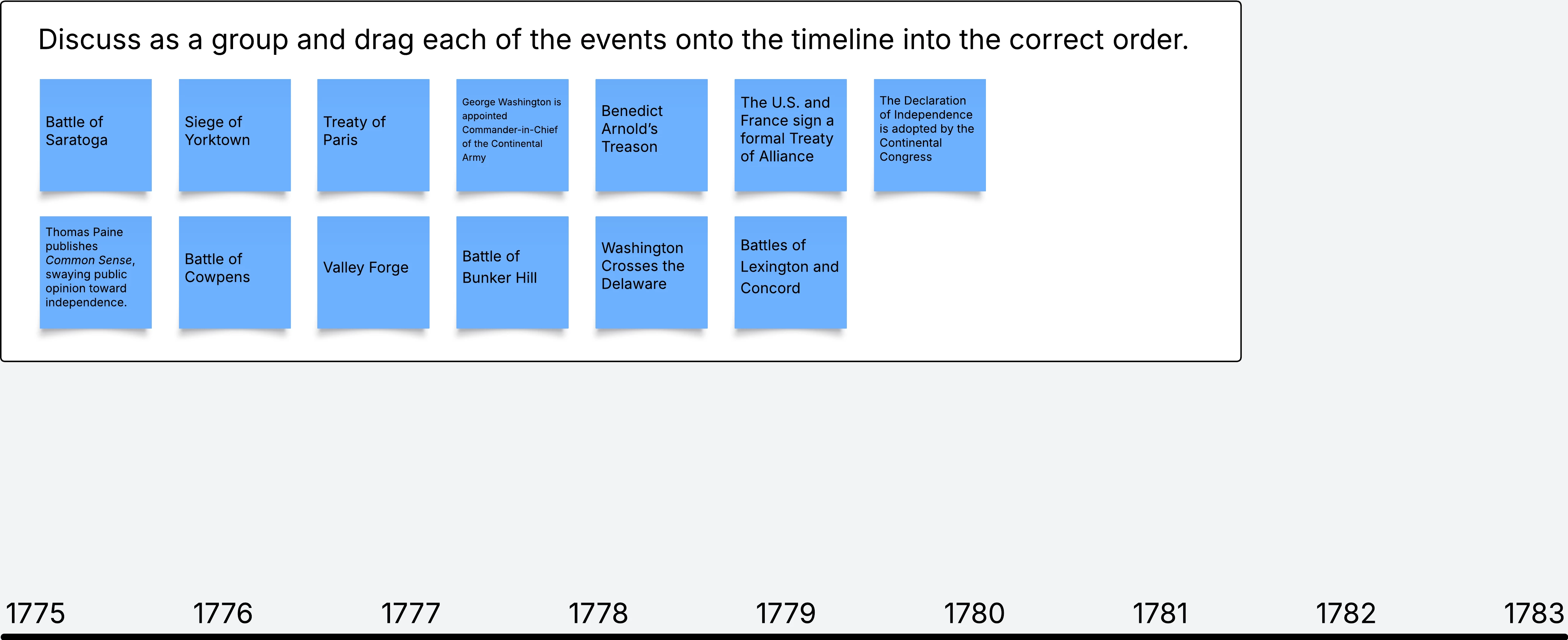
 

3- Students collaborate together to drag key events in the correct order

 

4- All of the groups come together to discuss and finalize the timeline


Option 2 | Jigsaw: Build and Share 


1-The instructor divides students into groups 

2- Each group is given a blank board and a DIFFERENT topic
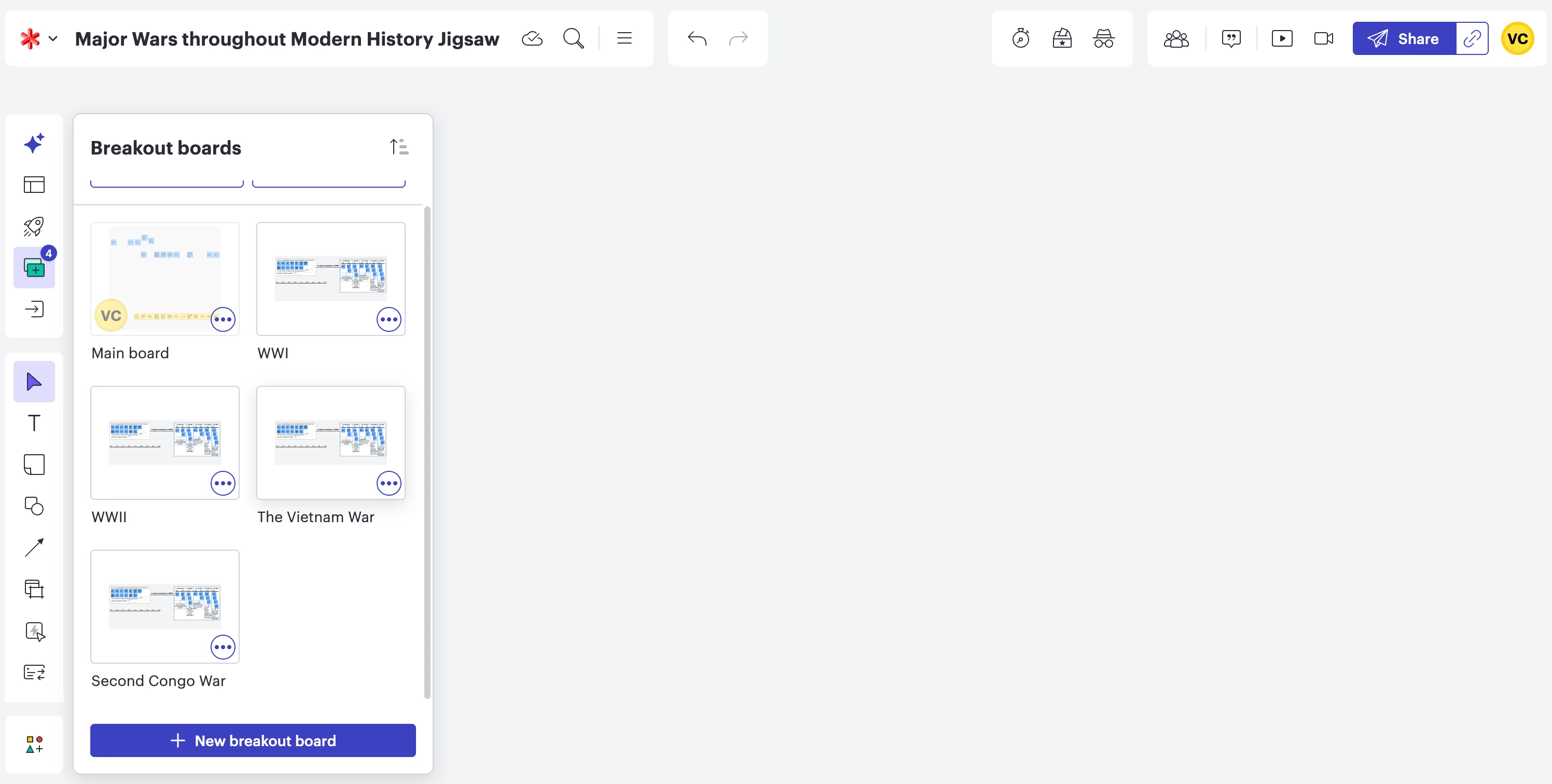
 

3- Students collaborate together to research and create a chronological timeline

4- Students come back together and share/teach their timeline with the whole class


Option 3 | Make Connections


1- The instructor divides students into groups 

2- Each group is given a list of the key events 

3- Groups discuss the correct order for each of the events 

4- Students analyze how certain events are connected to each other
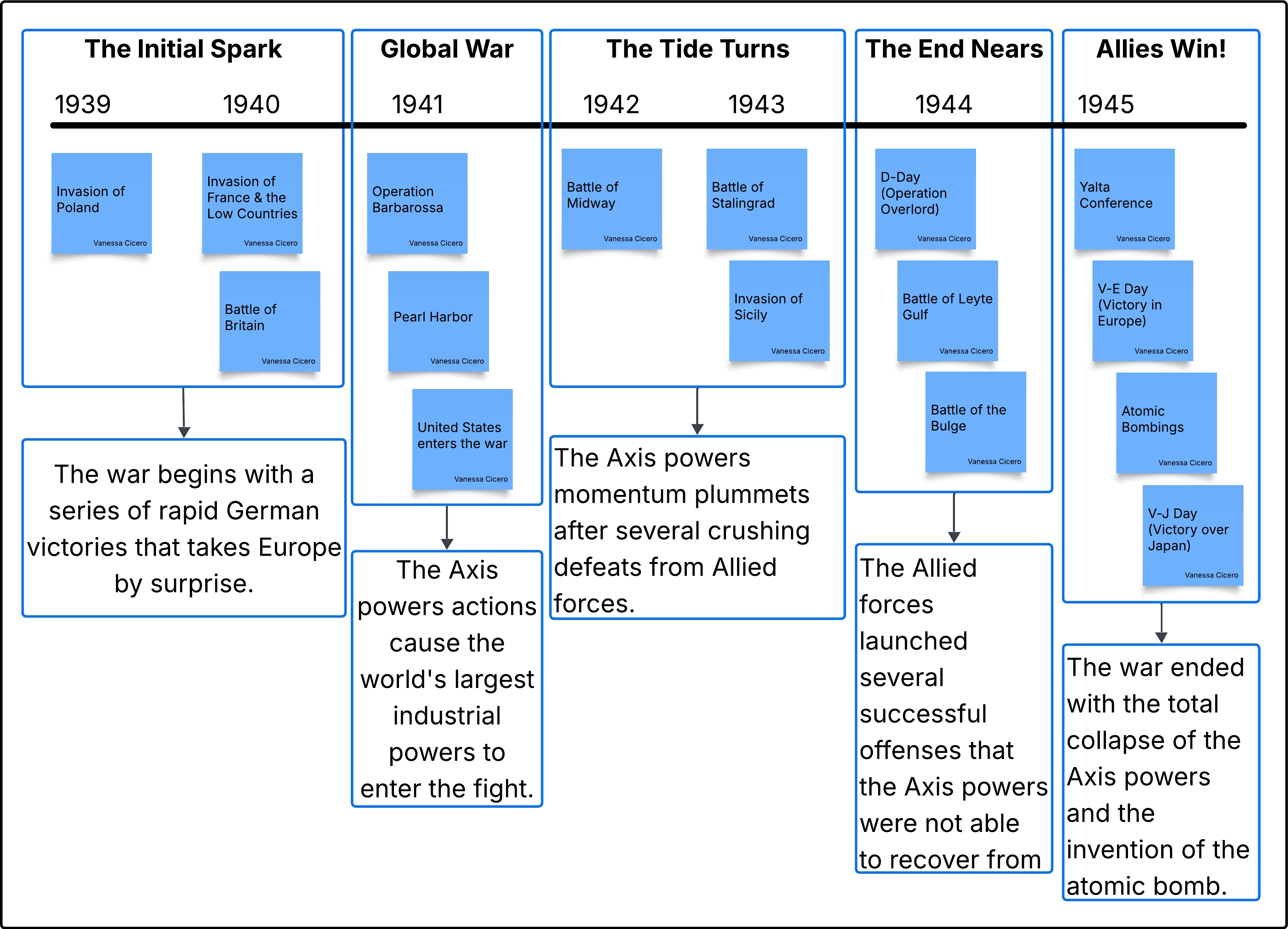
 

5- All of the groups come together and hold a discussion on where and each of the events should go and why.

Comments

Ashley T101
Forum|alt.badge.img+1

Thank you for sharing!  This made me think about how I can push my students further when we discuss animal life-cycles.  Every year we make animal life-cycles, but now for this year I am going to include a two life-cycles in one activity and add a venn diagram and ask the students to compare and contrast the two lifecycles.  Here is my template if you want to make your own copy.


Cara S
Forum|alt.badge.img
  • March 9, 2026

This is not the prettiest, but I like grouping students together when we are done reading a book and they work together to complete a story arc in Lucid.  Here is a link to my board.


Shira M
Lucid Legend Level 5
Forum|alt.badge.img+13
  • Lucid Legend Level 5
  • March 11, 2026


I absolutely love these ideas! I actually used a combination of Option 1 (Drag & Drop) and Option 2 (Jigsaw) for my unit on AI Ethics and data privacy.

Here is how I set it up to help students answer the big question: Who owns your voice, your face, and your art once it's on the internet?

I built a visual matrix where the Y-axis is a consent scale (ranging from harmful to acceptable) and the X-axis represents different digital rights (The Right to Consent, The Right to Credit, and The Right to Knowledge). Students collaborate to drag and drop sticky notes with real-world scenarios, like a SpongeBob AI cover or a voice clone scam, onto the board based on their ethical evaluation.

After mapping the scenarios, students are divided into legislative committees using breakout boards. Each committee looks at the harmful scenarios at the bottom of their specific column and works together to draft a rule for our class AI Bill of Rights to protect the right to own your digital self).

It takes them straight from evaluating real-world scenarios into drafting actionable, civic solutions.