


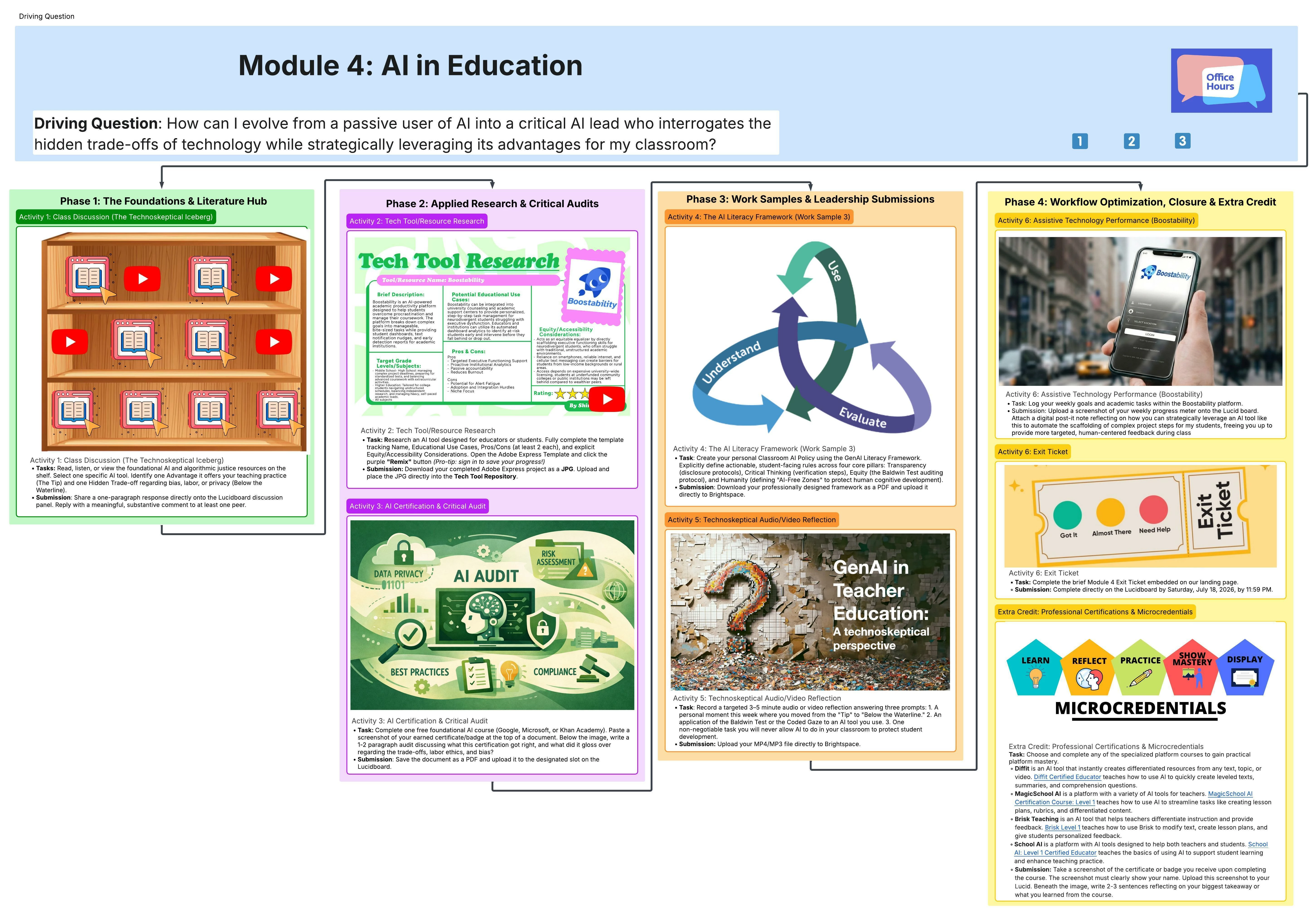
I recently decided to change how I structure my digital classroom because I noticed how overwhelmed my students were by the sheer number of links, platforms, and resources they are expected to navigate for every single college course. When I first started teaching, I realized that our standard LMS really only excels at hosting a gradebook and collecting major assignments, while the rest of the student experience feels incredibly clunky and piecemeal. Instead of forcing my students to fight that interface, I chose to use Lucid as our main interactive hub, keeping the LMS strictly for submitting larger files and major projects.
To streamline our workflow, I created an interactive landing page in Lucid for every week of the semester where all of our resources, readings, and tasks are organized visually. For any task that requires a formal submission, I simply embed a direct link on the board that takes students exactly to that designated assignment page in the LMS, saving them from clicking through endless folders. I also created visual breakout boards for all of our smaller weekly assignments and discussion tasks. This setup made annotating documents incredibly accessible.
During the first week, I had my students annotate our course syllabus with their questions directly on the board. Because everyone could see the document, peers answered each other's questions, and I could respond publicly to everyone at once, which completely eliminated the flood of identical, private emails I used to get.
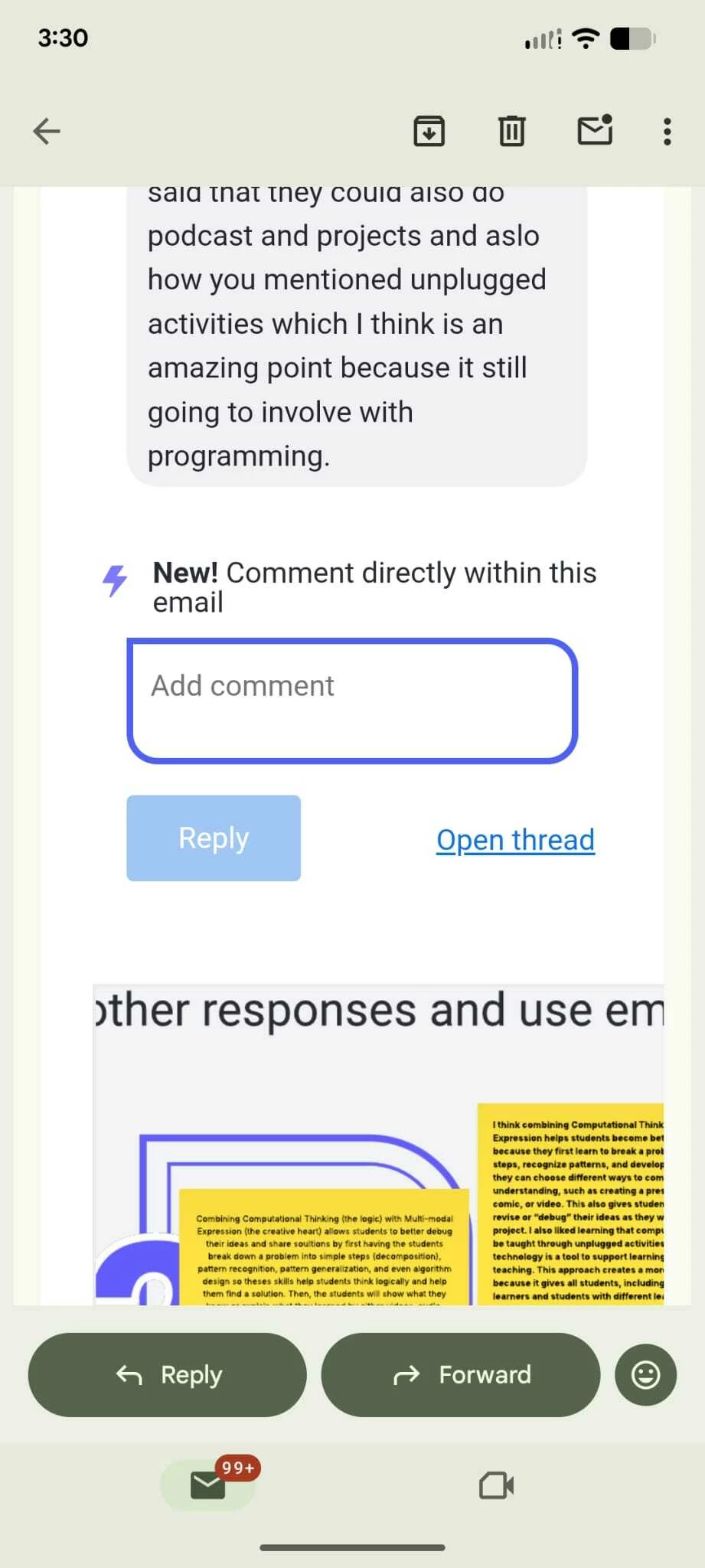
My favorite part of this setup is how it has transformed our classroom discussions. Usually, online forums feel like a chore where students write forced replies to the specified number of posts just to check a box. On our Lucid boards, I ask students to tag each other to build a real dialogue. When a student is tagged in a comment, they receive an email notification and can reply directly to that email. Their response automatically posts back onto the Lucid board, removing the friction of having to log into a separate portal just to continue a conversation. This simple integration has made our class discussions feel like a natural, ongoing stream of ideas.








 Your privacy choices


