


Music Theory | The Circle of Fifths
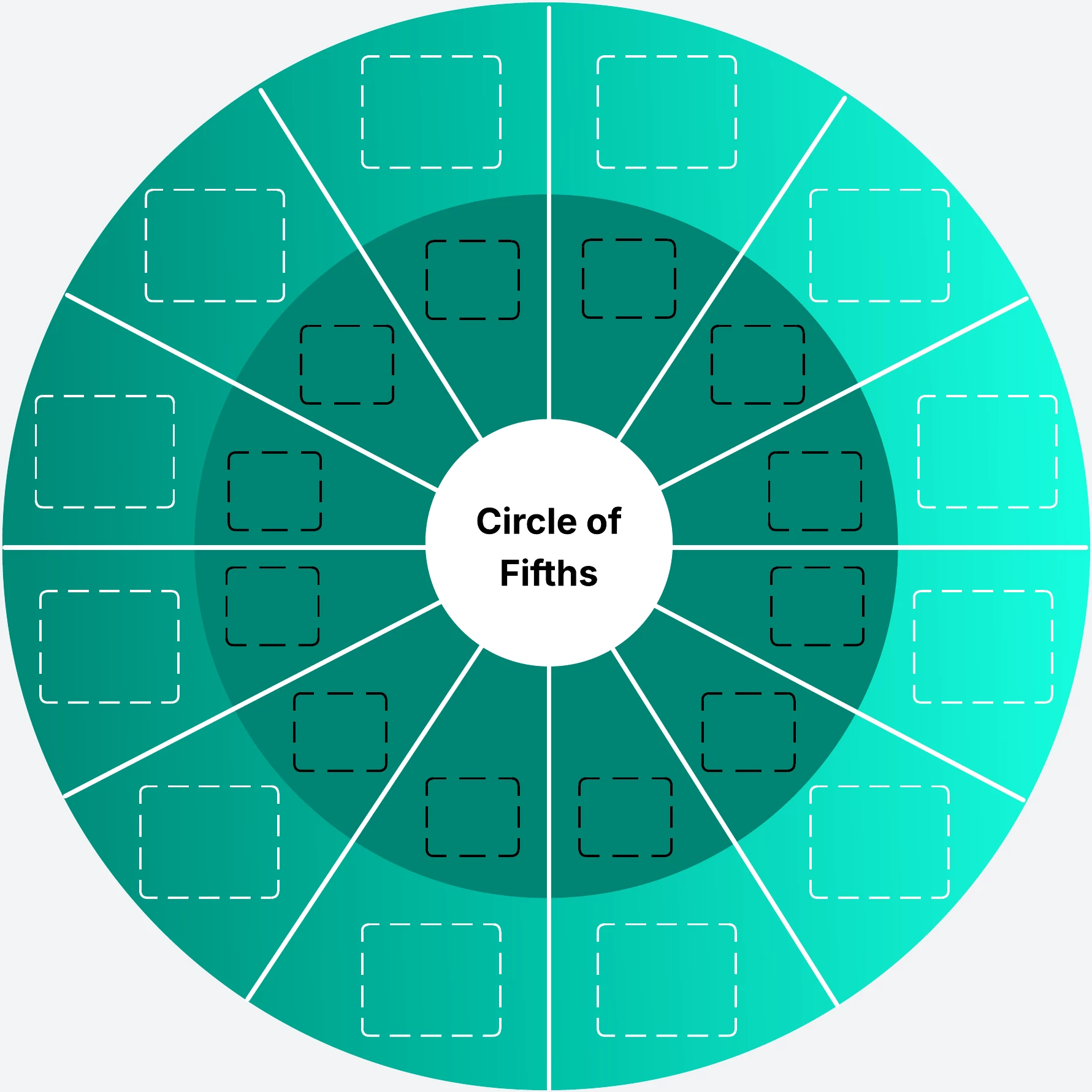
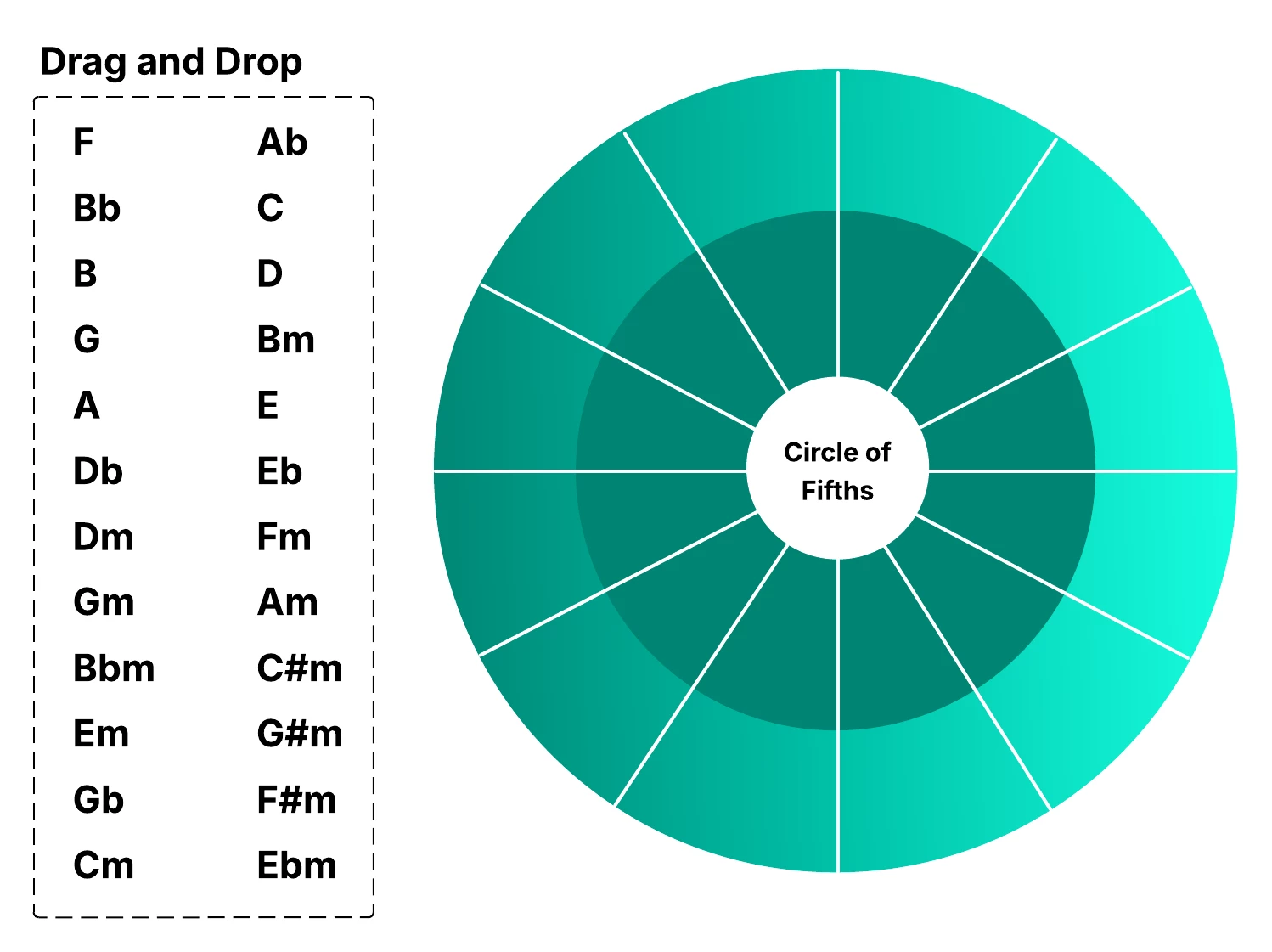
Template: The Circle of Fifths (fill in the blank and drag and drop)
Detailed Walkthrough
If you’ve spent more than a week in a music theory classroom, you’ve likely seen it: a clock-like diagram filled with sharps, flats, and capital letters. It’s the Circle of Fifths, and it’s is actually the ultimate "cheat sheet" for musicians. Instead of memorizing a random list of sharps and flats for every scale, the Circle provides a logical, visual map for students to easily understand.
While most textbooks provide a finished version, the real magic happens when students build their own. There is a massive cognitive difference between looking at a poster on a wall and drawing a diagram from scratch. The act of spacing out the 12 tones and calculating the intervals (five scale degrees apart) forces the brain to engage with the math of music allowing to students internalize the "Order of Sharps" (F, C, G, D, A, E, B) and see how they naturally stack upon one another.
By creating the Circle of Fifths in a Lucid document, students not only get the cognitive benefits from building the diagram themselves, but also gives them a polished diagram they can save and continue to use moving forward. There are a couple of ways instructors can set this up:
1.Give students an empty diagram and ask them to fill in each part.
2. Give students each of the parts and have them drag and drop them onto the
3. Give students a blank Lucid board and have them create their own from scratch








 Your privacy choices


